
The Multi Angle Corner Marker can be used for precision marking of Dot-to-dot hand piecing, as well as marking of corners of y-seam inserts and marking of mitered corners on bindings.
Video to follow soon
The Multi Angle Corner Marker can be used for precision marking of Dot-to-dot hand piecing, as well as marking of corners of y-seam inserts and marking of mitered corners on bindings.
Video to follow soon

I’m proud to have been invited to exhibit my Chiaroscuro Series at the Tina Skukan Gallary‘s Yearly Exhibition. The series consists of a group of 7 works depicting the play of light through net, The foundation fabric was dyed using the ice dyeing technique and adds interest to the background of every piece.


8th Clarens Quilt Festival 28 June 2023 – 1 July 2023
I’ll be teaching at the Clarens Quilt Festival this year. I am teaching three brand new classes.

This class focusses on the cutting of binding on the straight grain and on the bias, the preparation of the strips and how to appliqué by hand and machine. As a bonus, I’ll show you how to weave the strips to make a shape, in this case the heart in the center of the project.

Using paper foundation piecing, this pattern produces bold statement in swirls and diamonds to brighten up any space.

This class is about the application of net applique to produce a soft misty edge to the picture.
More information about the Festival and how to reserve a space at http://www.quiltinclarens.co.za/
See you there!!

Lappieswerk vir Kinders: Kreatiwiteit, Leer en Pret
Lappieswerk kan ’n wonderlike aktiwiteit vir kinders wees. Dit bied hulle die geleentheid om hul kreatiwiteit te verken, praktiese vaardighede te ontwikkel en die bevrediging te geniet van iets moois skep. Of hulle nou hul eerste lappieskombers maak of deelneem aan ’n gesinsprojek, lappieswerk stel kinders bekend aan ’n wêreld van kuns, ontwerp en stories vertel.
Deur kinders lappieswerk te leer, dra ons nie net ’n vaardigheid oor nie—ons gee vir hulle ’n kreatiewe uitlaatklep, ’n verbinding met tradisie en ’n lewenslange waardering vir vakmanskap en vrygewigheid. Dit is ’n vreugdevolle manier vir kinders om te leer, te groei en hul liefde deur handgemaakte skatte te deel.
Die sillabus bestaan uit ‘n reeks projekte wat aandag skenk aan al die fasette van naaldwerk. Spesiale aandag word geskenk aan die veiligheidsaspek van die gereedskap: skerp naalde en skêre en warm ysters kan met gemak reeds van kleins af handteer word. Goeie gewoontes word hopelik vasgelê die res van hulle lewes.
Kontak my vir meer inligting.
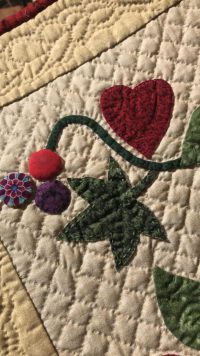
Quilting is much more than a simple craft; it is a profound expression of creativity and an enduring tradition that brings people together. This unique art form combines practicality with artistry, transforming fabric into intricate masterpieces that tell stories and evoke deep emotional connections. For those who quilt, the process is about more than just the finished product. It becomes a journey filled with creativity, personal fulfillment, and meaningful relationships.
The act of quilting provides numerous benefits for the mind, body, and spirit. It is a mentally stimulating activity that challenges the brain through designing patterns, selecting fabrics, and assembling complex designs. Each step requires problem-solving and critical thinking, much like solving a puzzle where every decision contributes to a cohesive and satisfying whole. Beyond the mental engagement, quilting also offers a therapeutic escape. The repetitive and rhythmic motions of sewing create a calming, meditative effect, helping to reduce stress and promote mindfulness. The tactile nature of handling soft fabrics and focusing on each stitch fosters relaxation and an improved sense of well-being. Furthermore, quilting serves as a creative outlet, allowing individuals to explore their artistic instincts. By mixing colors, textures, and patterns, quilters craft unique pieces that reflect their imagination and personality, transforming fabric into one-of-a-kind works of art.
Quilting is not merely a solitary pursuit but an activity that fosters connection and builds relationships. Quilting groups and guilds provide welcoming spaces where enthusiasts can share their passion, exchange knowledge, and support one another. These gatherings often evolve into cherished rituals, marked by laughter, camaraderie, and mutual encouragement, with friendships extending far beyond the craft itself. Quilting also has a way of bridging generations. Skills, techniques, and stories are passed down from grandparents to grandchildren, creating a legacy of shared tradition that strengthens family bonds and ensures the art of quilting endures.
More than functional items, quilts hold deep sentimental value and serve as heartfelt gifts. A handmade quilt is a tangible expression of love and care, often crafted with the recipient’s unique tastes and needs in mind. These thoughtful creations become treasured keepsakes, imbued with meaning and memories that last for years. Quilters also extend their generosity beyond personal gifting, contributing their creations to hospitals, shelters, and charitable organizations. These acts of kindness bring warmth and comfort to those in need, demonstrating the profound impact a single quilt can have on someone’s life.
Quilting is a timeless craft that blends technical skill, emotional depth, and creative expression. It enriches lives by fostering personal growth, building relationships, and spreading warmth and generosity. Whether shared among friends, passed down through generations, or gifted to loved ones and strangers, each quilt carries a legacy of beauty and love. In every stitch lies a reminder of the joy, care, and human connection that make quilting an art form of enduring value.

Card game for quilters and kids. Quiltie Cards teaches with which techniques blocks are made and names the patterns. A beautifully made pack of cards.
The object of the game is to make as many quilts as possible. A quilt consists of 3 cards. Match techniques, numbers or three consecutive numbers to make the quilt. Quilts may be changed in your turn to improve the quality of the quilt.
Each player is dealt 7 cards and a “Quick Score Chart”. The rest of the pack is placed face down. Each player pick up a card from the pack on their turn. “Pins and Needles” cards are included in the pack. You may choose to play or not when you encounter them.
When all the cards from the center pack have been played, The scores of the quilts are calculated according to the Quick Score Chart. The player with the highest score wins,


I am teaching at the SA Quilt Festival 2022.
http://www.goodhopequiltersguild.org.za/festival2022/
Book my Festival Classes online:
http://www.goodhopequiltersguild.org.za/festival2022/danel-muller-8
Portrait study
http://www.goodhopequiltersguild.org.za/…/302s-danel…
EQ8 in a nutshell
http://www.goodhopequiltersguild.org.za/…/402h-danel…
Using music as inspiration
http://www.goodhopequiltersguild.org.za/…/403h-danel…
Hope to see you there!!

CURVED PIECING is a technique class on how to sew curved quilt blocks. This is a full day class given by three teachers to ensure small groups and intensive teaching. Teachers will rotate during the class. The blocks include, “Drunkard’s path”, “I wish you well”,” Diane’s-diamond-fan”, “Flower Petal” and “Orange Peel”. The teachers will explain and demonstrate the techniques to achieve perfect curves.


This class is hosted by Jacaranda Quilters Guilde Teachers: Danél Muller, Erla Cilliers en Yvette Schröder.


And this is how it went


The 2022 Quilt-along focusses on colour and tone values. Blocks are in two sizes: 12″ x 12″ and 6″ x 12″. The first Block Patterns will be ready to download shortly. Contact me to join the Thursday group in Menlyn Pretoria by sending a WhatsApp message to 0824167690. Class fees are R150 per class. The quilt finishes at 72 x 90″ (180 cm x 230cm).
“And he dreamed and behold a ladder set up on the earth and the top of it reached the heavens and behold the angels of God were ascending and descending on it.”
Genesis 28:11-22
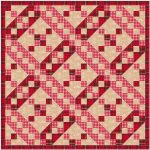
Jacob’s Ladder is a very old quilt block pattern, dating to before the American Revolutionary War. It is classified as a pioneer quilt pattern.
Jacob’s Ladder was first discussed in writing in a 1915 book called Quilts : Their Story and How to Make Them, by Marie Webster. It was the first authoritative book on the subject, making the claim that this pattern got its name from the Bible story of Jacob sleeping and receiving a vision of a ladder that led all the way to heaven.
This pattern is also known as ” The Road to California” “Stepping Stones”, “Covered Wagon”, “Road to the White House”, “Tail of Benjamin’s Kite”, “Wagon Tracks” and “Underground Railroad” depending in which area it was used.
The first publication of the pattern was in 1884, as Jacob’s Ladder. There are over a dozen variations in number of colors and values or sizes. The oldest version is done in only two colors.

In 1922, as part of the Ladies Art Company of St Louis, Missouri’s booklet Quilt Pattern Book, Patchwork and Appliqué, featured three variations. Number 207, which features a four patch at the corners and a full square on two diagonal corners in Number 237. In Number 239 the corner pieces are consolidated to form Road to Oklahoma.


I used two shades of red plaid in the red memory quilt and I scrambled the four patches to create a checker board of colour on the intersection of the blocks.


