Quilts are more than functional textiles—they are vibrant expressions of creativity, heritage, and storytelling. Exhibiting quilts with respect means showcasing them in a way that honours their makers and allows each piece’s unique features to shine. One of the most powerful methods to achieve this is by giving each quilt a “frame of nothingness”—a space around the quilt that lets it breathe and draws the viewer’s focus to its artistry.
Understanding the Importance of Space
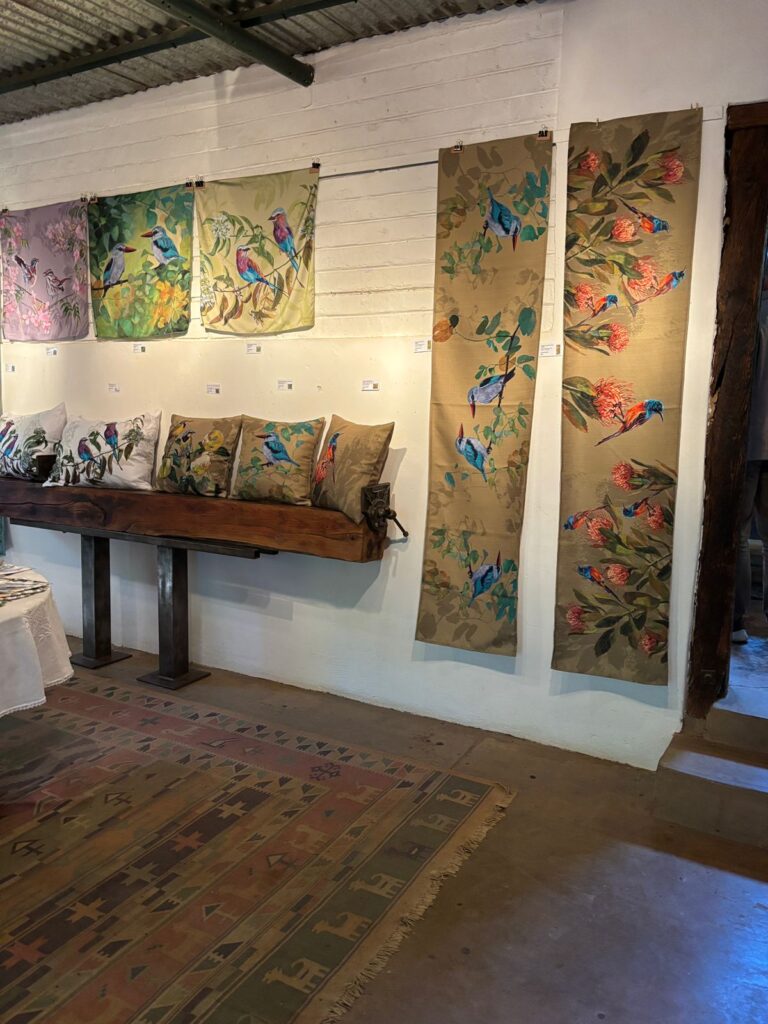
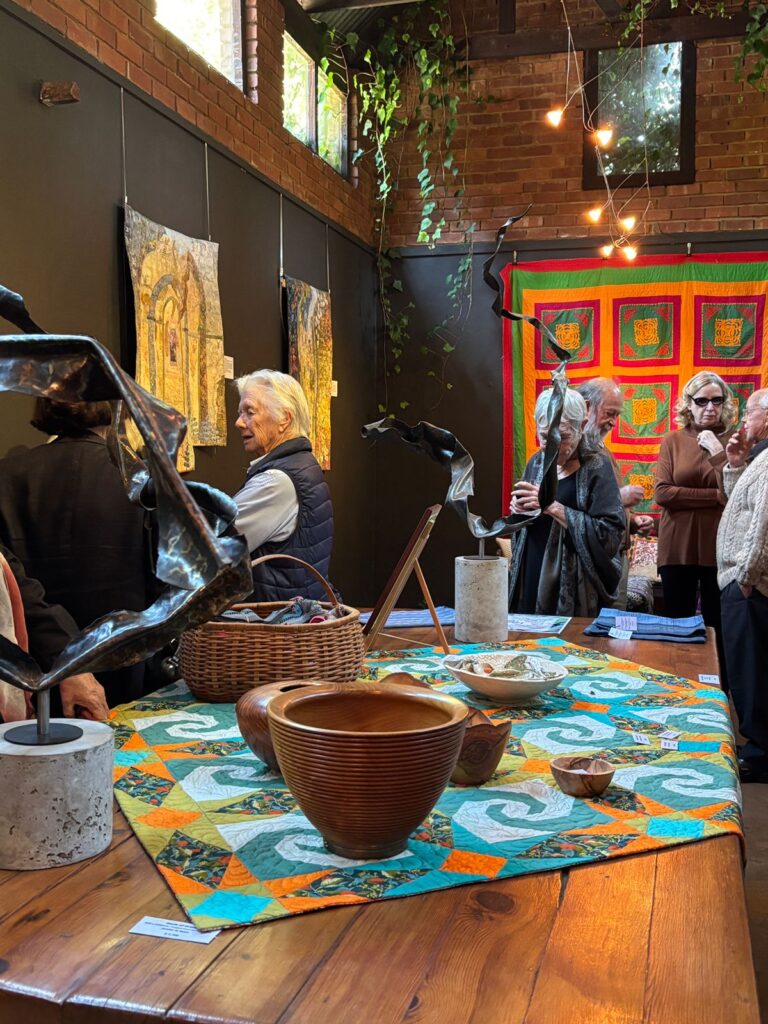
When hung too closely together or surrounded by visual clutter, even the most stunning quilts can lose their impact. A frame of nothingness refers to intentionally leaving space around each quilt—either through physical distance on gallery walls or by using neutral backgrounds that do not compete with the quilt’s colours and patterns. This spatial buffer acts like a silent frame, helping viewers to fully appreciate the details, textures, and stories woven into each piece.
Practical Tips for Exhibiting Quilts
Use Neutral Backgrounds: Hang quilts against plain, light-coloured walls or draping. Avoid bold wallpaper or busy backdrops that might distract from the craftsmanship.
Allow Generous Spacing: Position each quilt with ample gaps on all sides. This could mean fewer quilts per wall, but each piece will command more attention and admiration.
Consider Lighting Carefully: Soft, even lighting helps highlight colours and stitches without creating harsh shadows or fading fabrics. Adjustable gallery lights can enhance the visual experience.
Eye-Level Display: Hang quilts so that the centre is at eye level for most visitors. This makes the viewing experience comfortable and respectful.
Minimal Mounting Hardware: Use discreet hanging systems or sleeves sewn to the back of the quilt to avoid distractions and maintain the quilt’s integrity.
Honouring the Quiltmaker’s Vision
Providing each quilt with its own “frame of nothingness” is a mark of respect for both the artwork and its creator. It signals to viewers that these textiles are worthy of contemplation and appreciation, not just functional objects. By being intentional in how we exhibit quilts, we ensure that their best features—whether intricate piecing, bold colour choices, or subtle hand-stitching—are given the attention they deserve.
In the end, a little restraint in presentation goes a long way. The quiet space around a quilt can speak volumes, allowing its story to emerge and resonate with all who have the privilege to view it.
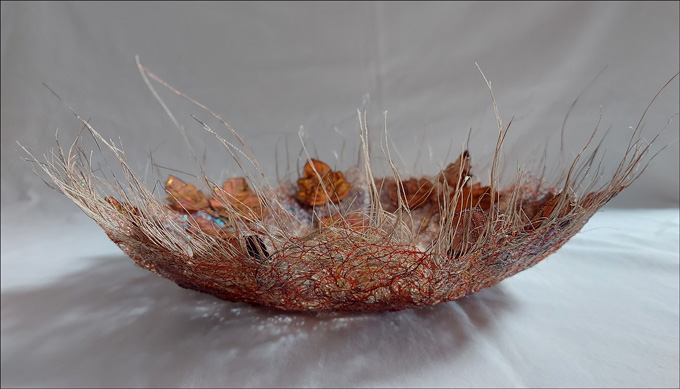
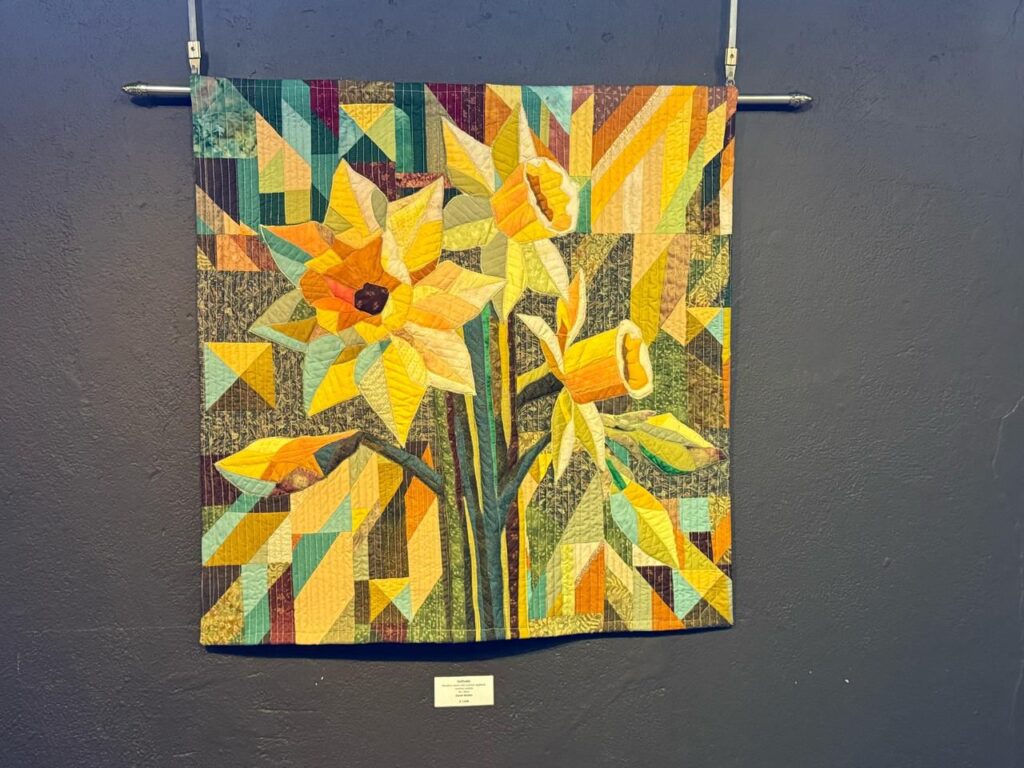
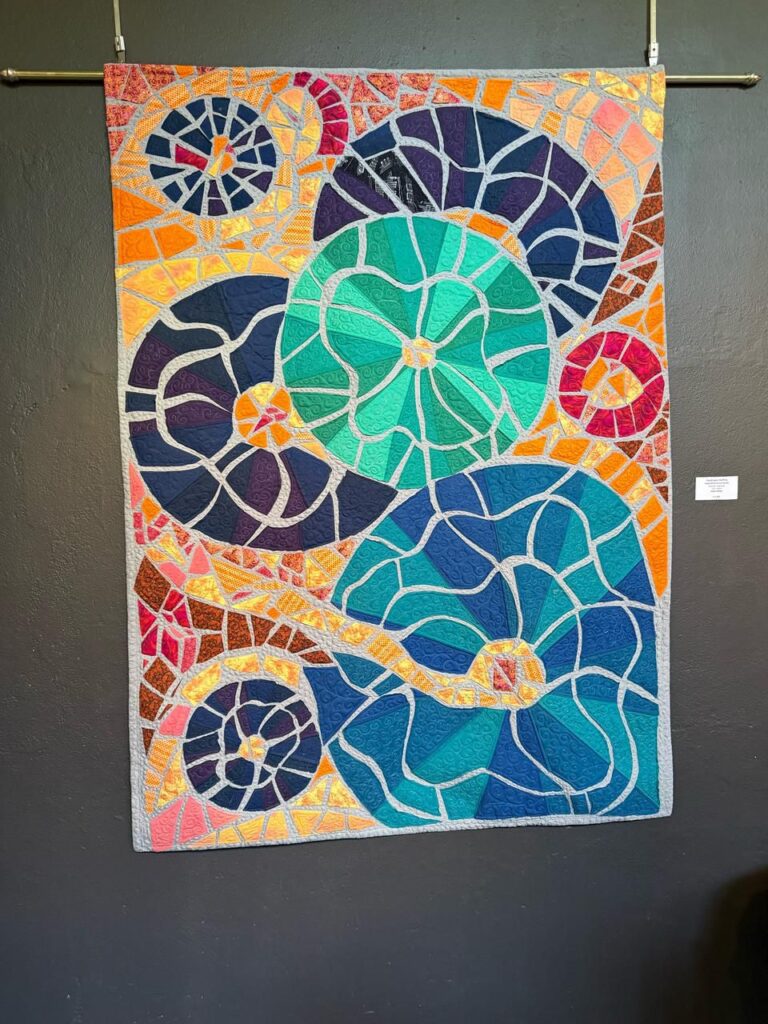
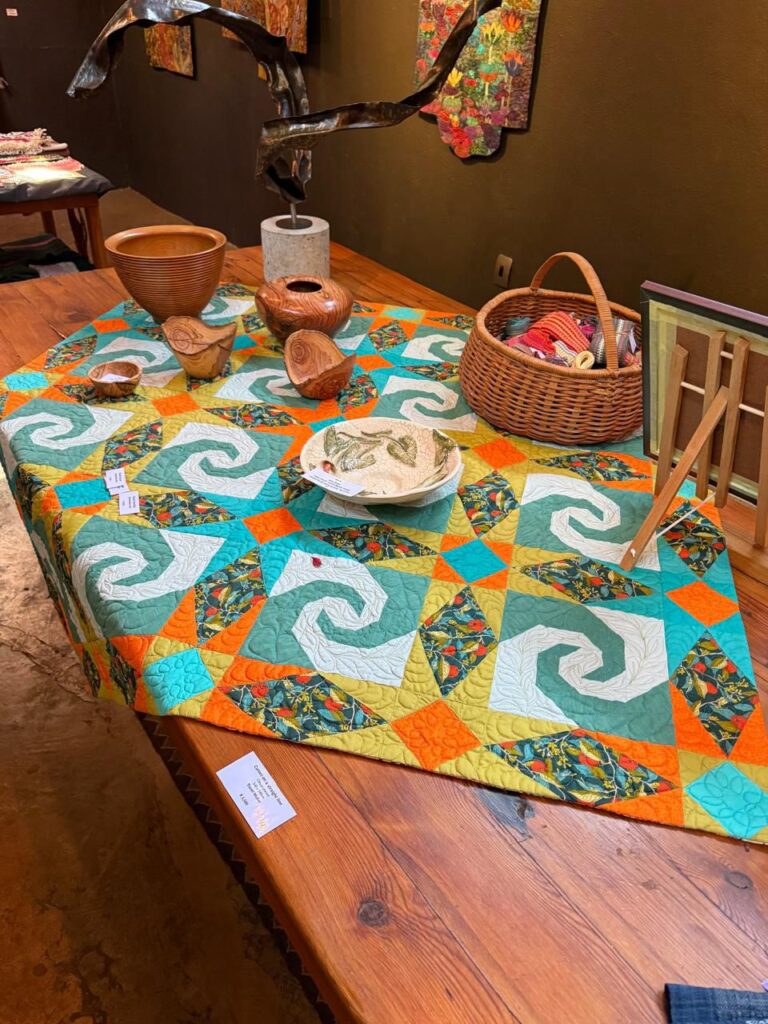
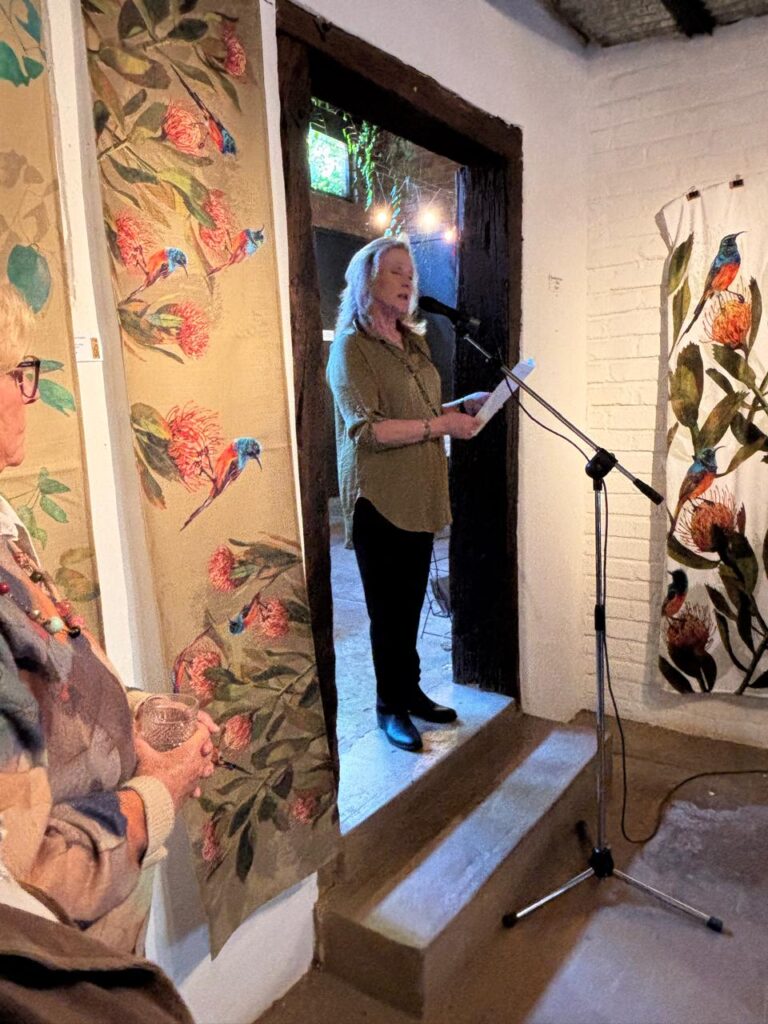
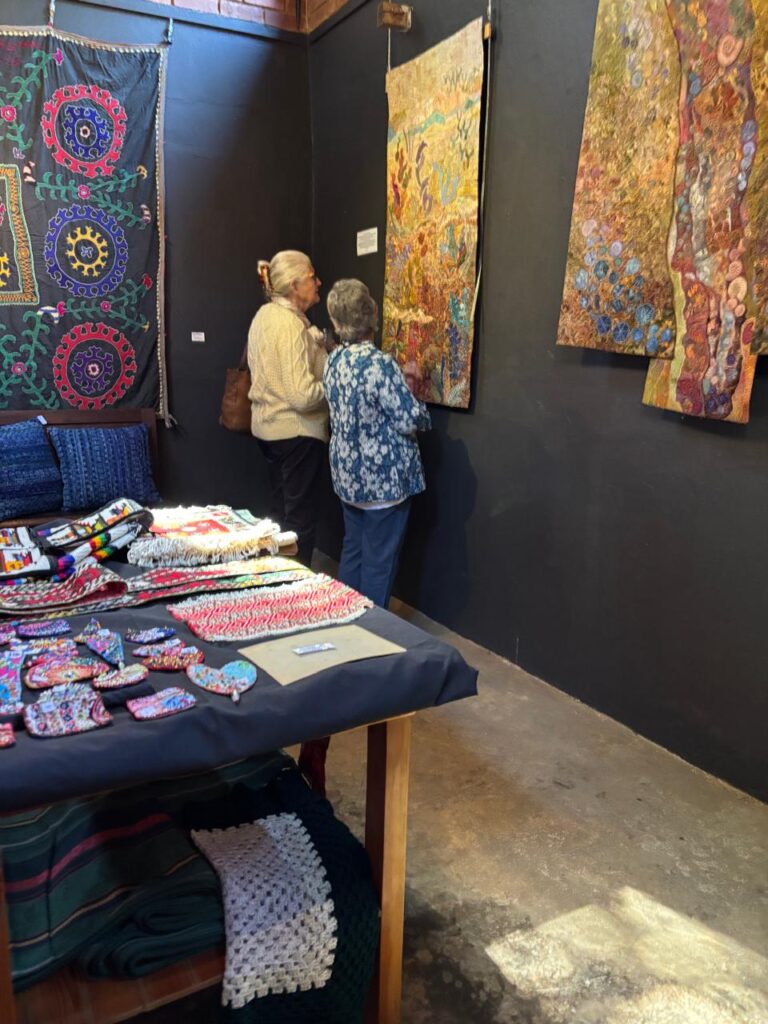
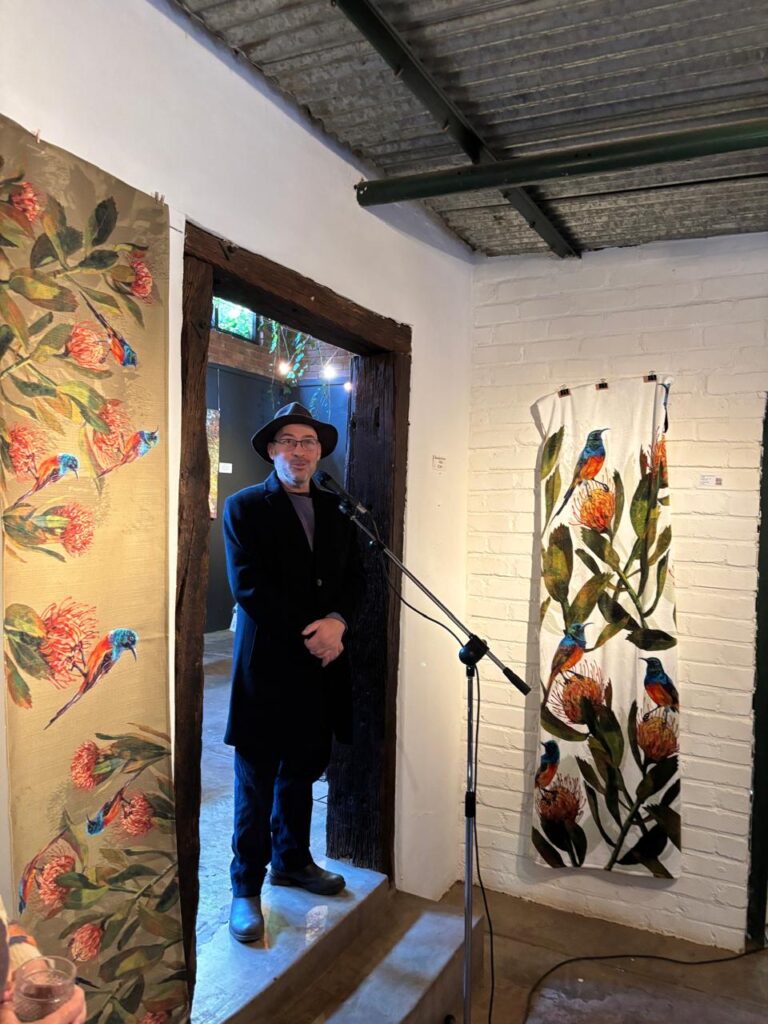
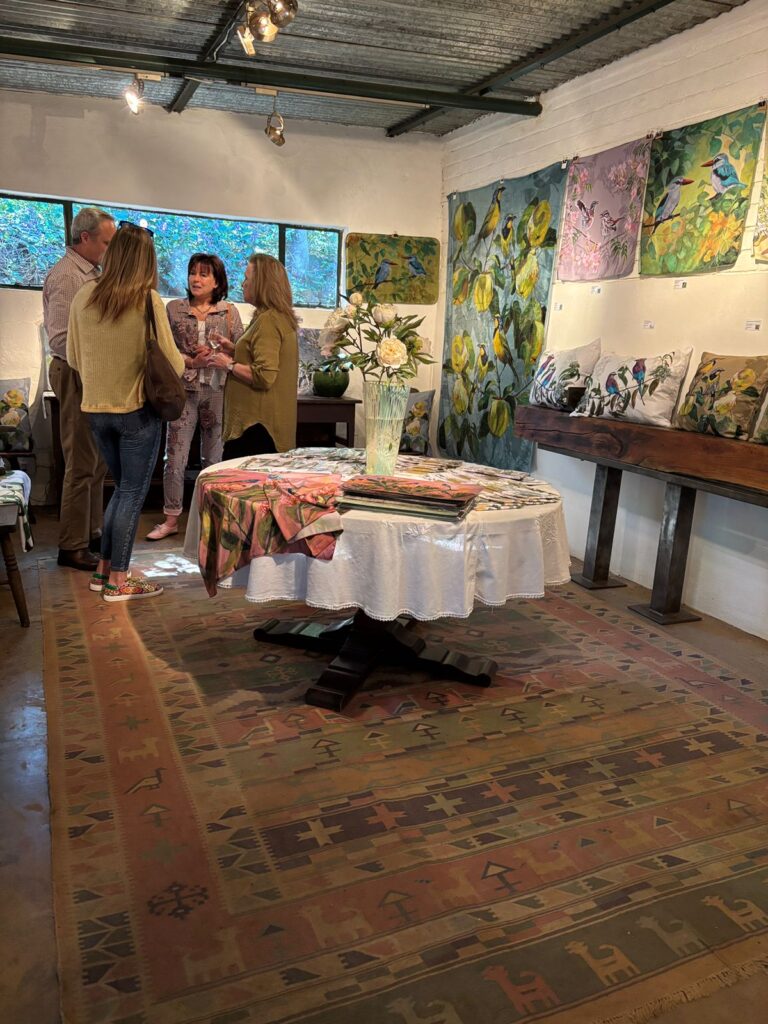
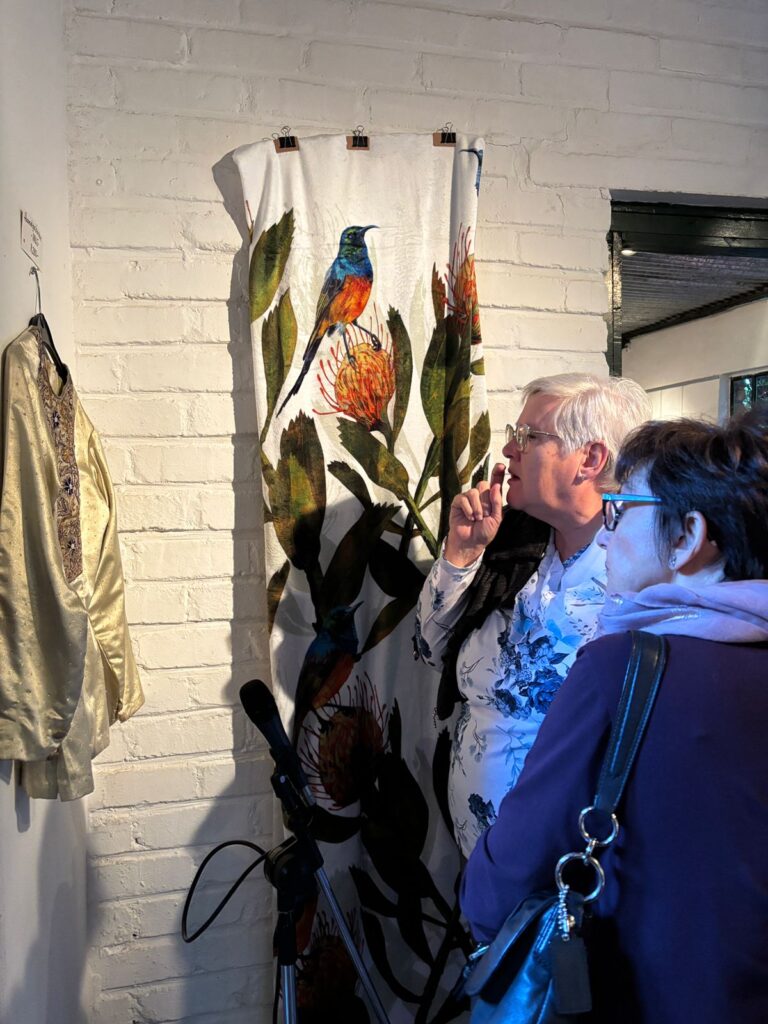
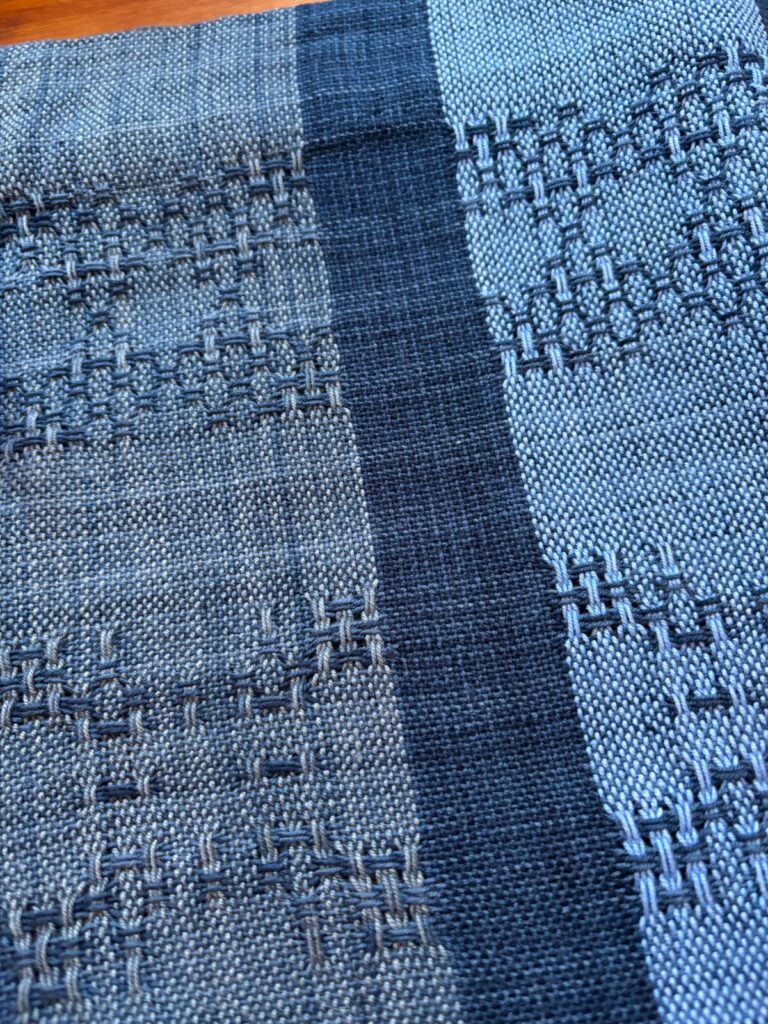
The Tina Skukan Gallery cordially invites you to an exhibition of textiles, fabrics and contemporary art quilts, remarkably varied in their themes, designs and materialsby Antoinette Nel, Danél Muller, Elaine Louw Jenny Hearn Lein Smuts, Marlene Toerien and Tilly de Harde The fabric and textiles used in these works of art were created with a variety of textures, colours, patterns, prints, fabric with sheen and also woven fabrics. These textile artists push the boundaries of the traditional medium. Their work is dynamic, innovative, thought provoking, creative and compelling. The exhibition will be opened on Sunday 18 May 2025 at 11h30 – 14h00 by Tilly de Harde Award-winning and renowned Textile Artist The exhibition can be viewed until 12 June 202
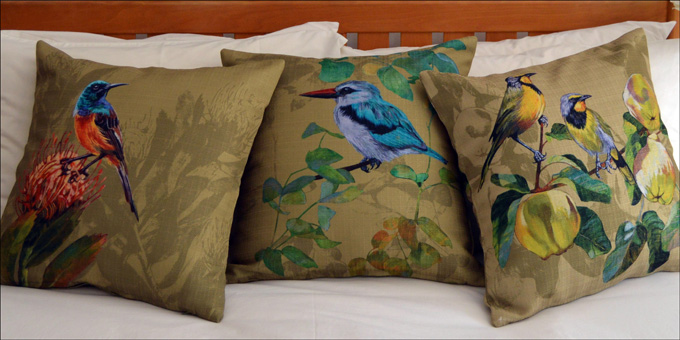
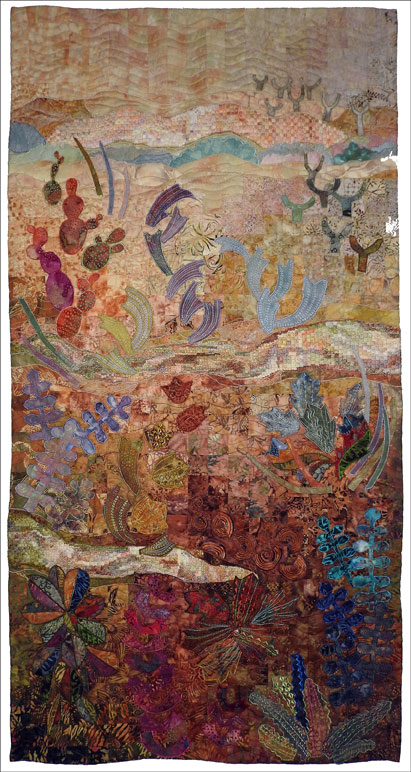
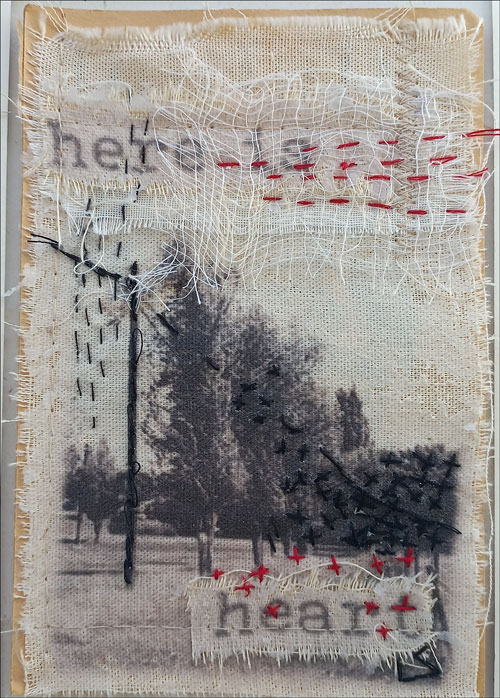
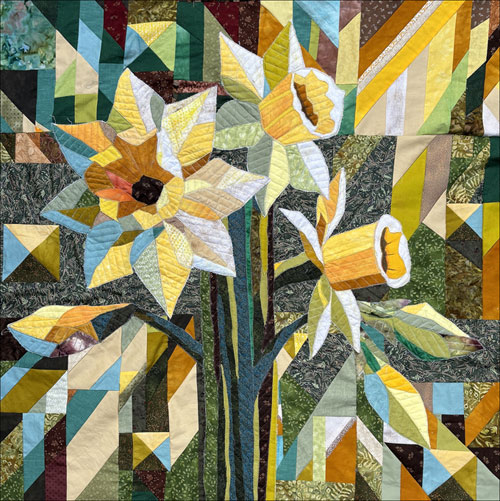
‘Scatter cushions’, ElaineLouw‘Succulent Karoo Biome’, 140 x 72cm, Commercial and hand dyed fabrics and threads Machine and hand pieced, quilted and embroidered, Jenny Hearn‘Waar die hart lê’, 12 x 8cm, Digital print on cotton, Lein Smuts‘Daffodils’, 90 x 90cm, Pieced in cotton with machine appliqué, machine quilted
Danél Muller‘Autumn with Copper Leaves’, 34 X 14cm Fibre and Textile, Tilly de Harde
The art of quilting has long been associated with storytelling, memory, and self-expression. In Voices in Cloth, a compelling project within the larger 100 Voices series, quilting becomes more than a craft — it becomes a narrative act, a means of recording identity, and a bridge for building community. This initiative highlights the profound ways in which quilts can speak, both literally and symbolically, through fabric, thread, and personal voice.
At its heart, Voices in Cloth emphasizes the narrative aspect of quilting, with each quilt serving as a deeply personal expression of the quilter’s life, experiences, and reflections. Far from being simply decorative or utilitarian, these quilts are visual diaries — textured, layered, and rich with meaning. Every piece tells a story, unique to the maker, yet resonant to a broader audience.
The project also acts as a platform for showcasing South African identity and creativity. Quilters are encouraged to bring their cultural backgrounds, local influences, and personal histories into their designs, allowing for a vibrant and diverse display of styles and messages. This form of expression is not only creative but also deeply affirming, giving voice to quilters from across the country and highlighting the artistic excellence that exists within these communities.
Crucially, Voices in Cloth fosters a sense of community and collaboration. While many quilts are made by individuals, some include contributions or feedback from friends and fellow quilters, reinforcing the social aspect of quilting. This collaboration reflects traditional communal craft practices and strengthens bonds within the quilting community. It is not just a solitary activity but a shared journey.
To ensure these voices and stories reach a wider audience, the quilts are exhibited publicly. These exhibitions enhance accessibility, inviting viewers to engage with the works, reflect on their messages, and learn more about the people behind them. This visibility promotes appreciation of quilting as both an art form and a medium for storytelling.
Adding further depth, the project incorporates oral histories. Each quilt is accompanied by a short video in which the quilter shares their thoughts, process, and personal context. These recordings allow viewers to hear the maker’s voice directly, turning the quilts into living documents that weave together visual and spoken narratives.
Many quilters are drawn to specific themes or inspirations, often exploring topics that are emotional, symbolic, or abstract. Quilters are encouraged to create meaningful works, even if the message is unconventional or interpreted differently by each viewer. This openness to experimentation and self-expression makes each quilt a unique artistic and emotional statement.
Ultimately, Voices in Cloth stands as a vital chapter in the broader 100 Voices series, which seeks to recognize and celebrate the diverse voices of South African quilters. Through this project, quilting is elevated beyond technique and craft — it becomes a rich, multi-dimensional expression of voice, identity, and connection
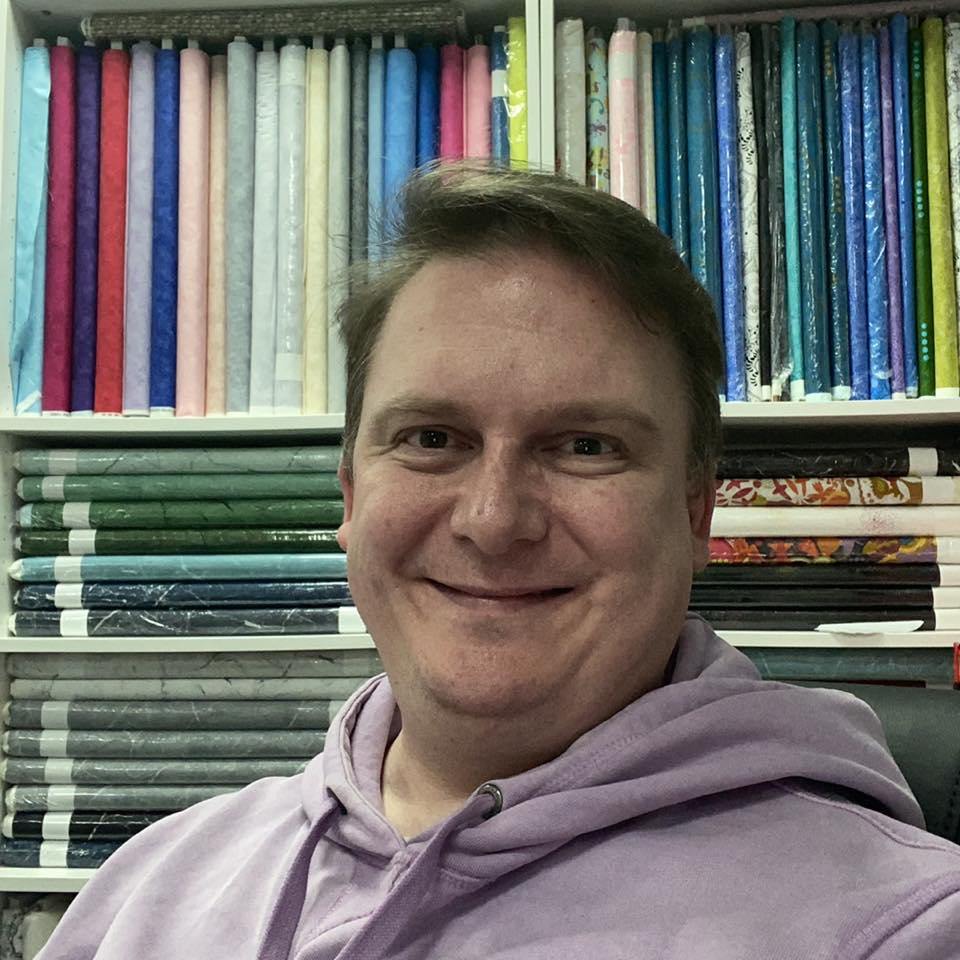
Listen to Danel’s interview with John Cole-Morgan discussing the part she played in the Voices in Cloth Exhibition.
John Cole-Morgan, a passionate quilter, educator, and advocate for the arts, founded the Voices in Cloth initiative with a clear and deeply personal purpose: to celebrate, preserve, and uplift the diverse voices within South Africa’s quilting community. His motivation stemmed from a profound recognition that quilting is not merely a craft but a powerful form of storytelling — one that captures personal histories, cultural identity, and emotional journeys through fabric and thread.
One of Cole-Morgan’s core motivations was to give a voice to everyday quilters. While quilting exhibitions often highlight elite or highly trained artists, he saw an entire world of unsung creativity thriving in communities across South Africa. Many quilters, especially those from underrepresented backgrounds, were producing meaningful, moving work without access to platforms that allowed them to share their stories. Voices in Cloth emerged from his desire to correct this imbalance and to emphasize that every quilter’s voice matters, regardless of their status, training, or experience.
Another key driver was his belief in quilting as a form of narrative preservation. Cole-Morgan viewed quilts as more than stitched patterns or decorative objects — he understood them as visual records of memory, emotion, and identity. In a country as culturally complex and historically rich as South Africa, he recognized quilting as a medium uniquely suited to capturing layered stories. By pairing each quilt with the quilter’s voice, through video and oral history, he created a living archive of South African life as told by the people themselves.
In addition, Cole-Morgan was deeply committed to inclusivity and representation. He believed the quilting world needed to reflect the full spectrum of South African society — encompassing different languages, races, genders, geographies, and artistic approaches. His initiative challenged conventional ideas about what a “proper” quilt looks like or who gets to be called a “quilter.” Through Voices in Cloth, he aimed to foster a quilting culture that is welcoming, accessible, and respectful of all creative expression.
Equally important to him was community building. Cole-Morgan understood the power of connection within the quilting world. Quilting circles often become spaces of support, friendship, and collaboration. Voices in Cloth was designed not only as an exhibition but as a community project — one that encouraged quilters to collaborate, contribute to one another’s stories, and share their work with broader audiences. In doing so, he helped to strengthen the social fabric that binds quilters together.
Ultimately, what drove John Cole-Morgan was his unshakable belief in the transformative power of storytelling through cloth. He knew that when quilters were invited to tell their stories — honestly, proudly, and in their own voices — it had a ripple effect. It validated their experiences, inspired others to share their own, and drew viewers into a deeper understanding of the people behind the stitches. Voices in Cloth stands as a tribute to that vision: a celebration of quilting as an art form, a history, and a voice for all. John’s Facebook page is at https://www.facebook.com/iQuiltStudio
I’m proud to have been invited to exhibit my Chiaroscuro Series at the Tina Skukan Gallary‘s Yearly Exhibition. The series consists of a group of 7 works depicting the play of light through net, The foundation fabric was dyed using the ice dyeing technique and adds interest to the background of every piece.
A quilt will warm your body and comfort your soul
Quilting teaches patience. It builds confidence. It creates friendships. It becomes a legacy.
I support Up-Cycled Cloth CollectiveStop and think: How can I re-purpose this piece of cloth before I put in in the landfill?