Posted on

Choosing a colour palette for your quilt

Choosing colours for any quilting project is a creative and enjoyable process that greatly impacts the overall aesthetic of a quilt. The selection of colours involves considering personal preferences, the intended design, and the mood or theme of the project. Here are some tips and strategies to help guide colour choices for hand piecing:

Understand Colour Theory

Familiarize yourself with the basics of the colour wheel, including primary, secondary, and tertiary colours, as well as complementary, analogous, and triadic colour schemes. You can also, with great succes use a monochrome scheme. This can be as easy as to read your colour wheel.

A colour wheel with primary and secondary colours


Use the principles of contrast and harmony to balance bold and subtle tones in your design.

Start with a Focal Fabric

  • Select a fabric with a pattern or colour scheme that inspires you and build your colour palette around it.
  • Pull colours from the focal fabric to coordinate your other fabric choices, ensuring cohesion across the quilt.

Consider the Mood or Theme

  • Choose colours that reflect the mood you want to evoke. For instance, soft pastels create a calm and soothing feel, while bright, vibrant colours convey energy and playfulness.
  • Seasonal or thematic quilts (e.g., autumn leaves, seaside scenes) often draw from specific colour palettes associated with the theme.

Cosider these two patterns for a scatter cushion.

Test Value and Contrast

  • Incorporate a mix of light, medium, and dark shades to create depth and visual interest.
  • Use value contrast to define patterns, ensuring individual pieces stand out rather than blending.
  • Viewing fabrics in black and white (by taking a photo, change the effect to grey scale or using a colour-reducing app) can help evaluate value differences.

Use a Design Wall or Mock-up

  • Arrange fabric swatches on a design wall or piece them together loosely to see how the colours interact.
  • Adjust the placement or swap fabrics until you’re satisfied with the overall balance.

Limit or Expand Your Palette

  • For simplicity, start off with a limited palette of 2-3 colours for a cohesive look.
  • If you are a little braver, you can embrace a scrappy style by including many different colours, united by a common feature like tone, value, or pattern. Group the fabric in tone value – light medium or dark, rather than colour.
  • Another trusted method is to choose a focus fabric and pick up the colour palette from the prints on the fabric with the rhyme: one darker, one lighter, one duller one brighter. This gives you a pallet of five colours. Your personal taste will depend on the fabric you want to emphasise. (Beyer, 2019) This method ensures a balanced palette with effective variety in tone values.

Experiment with Fabric Patterns

  • Combine solids and prints for variety. Solids can anchor the design, while prints add texture and interest.
  • Consider the scale of the fabric patterns to ensure they complement rather than overwhelm your design.

Use Pre-made Colour Tools

  • Colour cards, quilting colour wheels, and online palette generators can inspire your choices and provide combinations that work well together.
  • Explore fabric collections from designers, as they often include pre-coordinated fabrics that simplify the selection process.

Be Inspired by Nature or Art

  • Nature provides endless colour combinations that work beautifully together—think of the greens and blues of a forest or the warm hues of a sunset.
  • Artwork, photographs, or even home décor can spark ideas for unique colour palettes.

Trust Your Intuition

  • Ultimately, quilting is a personal expression of creativity. Choose colours that resonate with you, as they will make the process more enjoyable and the final piece more meaningful.

By thoughtfully selecting colours, quilters can bring their designs to life, creating visually stunning and emotionally resonant quilts. Experimentation and practice will help develop a personal style and a keen sense for combining colours effectively.

Posted on

The Value of a Memory Quilt

A memory quilt is a deeply personal and sentimental creation, holding immense emotional and symbolic value. It transforms cherished moments, milestones, and loved ones’ keepsakes into a tangible, lasting tribute. Its worth goes far beyond its physical components of fabric and thread, encompassing the stories, connections, and emotions stitched into every piece.

Emotional Value

  • Preservation of Memories: A memory quilt captures moments in time—baby clothes, wedding fabrics, concert T-shirts, or a loved one’s garments. It becomes a tangible way to revisit precious memories.
  • Healing and Comfort: Memory quilts can provide solace during times of loss or change. Wrapping oneself in the fabric of a loved one’s history is like a warm, emotional embrace.
  • Celebration of Milestones: From graduations to anniversaries, memory quilts honor life’s milestones in a unique and lasting way.

Symbolic Value

  • A Legacy of Love: Memory quilts can be passed down through generations, preserving family stories and traditions. Each square becomes part of a larger narrative, connecting the past to the future.
  • A Representation of Connection: Every fabric piece contributes to the whole, symbolizing how moments and people shape our lives.

Artistic and Handmade Value

  • Unique Craftsmanship: A memory quilt is a one-of-a-kind piece of art. The time, thought, and skill involved in its creation add to its irreplaceable nature.
  • Expression of Creativity: The design process allows the maker to weave memories into a beautiful and functional keepsake.

Gift Value

  • Thoughtful and Personalized: Giving or receiving a memory quilt is one of the most heartfelt gestures, demonstrating love, thoughtfulness, and care.
  • Timeless Appeal: Unlike many other gifts, a memory quilt retains its sentimental and practical value for years to come.

In essence, the value of a memory quilt lies in its ability to transform fabric and thread into a vessel of love, remembrance, and legacy. It is more than a quilt—it is a story, a connection, and a treasured piece of one’s history.

Posted on

Christmas 2024

As the holiday season draws near, I want to take a moment to wish each of you a very Merry Christmas and a joyful New Year. This time of year is filled with magic, warmth, and togetherness—qualities that remind us of the importance of kindness, gratitude, and love.

To my students, thank you for your hard work, curiosity, and enthusiasm throughout the year. You’ve brought so much energy and creativity to our classroom, and I couldn’t be prouder of all that you’ve accomplished.

May your holiday season be filled with laughter, rest, and the company of those you cherish. I hope you find time to enjoy the little things that make this time so special—sparkling lights, warm treats, and the joy of giving and receiving.

Take care of yourselves, have fun, and come back ready for more adventures in the new year!

To say thank you, I have reworked the Christmas quilt of 2011 a little and include the pattern to download for free. The first layout is for a wall quilt or throw and finishes at 51″ x 51″

Christmas 2024

If you want to use the pattern to make a tree skirt, you might like to use this alternative layout.

You may choose to buy fabric for this project, or use scraps in pieces of green or red, Enjoy!

DOWNLOAD FOR FREE

Be blessed and stay safe this holiday,
Danél
2024

Posted on

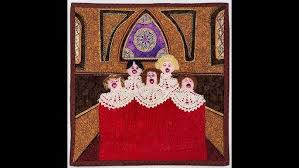
Voices in Cloth: Quilting as Narrative, Identity, and Community in South Africa

Voices in Cloth

An initiative by John Cole-Morgan

The art of quilting has long been associated with storytelling, memory, and self-expression. In Voices in Cloth, a compelling project within the larger 100 Voices series, quilting becomes more than a craft — it becomes a narrative act, a means of recording identity, and a bridge for building community. This initiative highlights the profound ways in which quilts can speak, both literally and symbolically, through fabric, thread, and personal voice.

At its heart, Voices in Cloth emphasizes the narrative aspect of quilting, with each quilt serving as a deeply personal expression of the quilter’s life, experiences, and reflections. Far from being simply decorative or utilitarian, these quilts are visual diaries — textured, layered, and rich with meaning. Every piece tells a story, unique to the maker, yet resonant to a broader audience.

The project also acts as a platform for showcasing South African identity and creativity. Quilters are encouraged to bring their cultural backgrounds, local influences, and personal histories into their designs, allowing for a vibrant and diverse display of styles and messages. This form of expression is not only creative but also deeply affirming, giving voice to quilters from across the country and highlighting the artistic excellence that exists within these communities.

Crucially, Voices in Cloth fosters a sense of community and collaboration. While many quilts are made by individuals, some include contributions or feedback from friends and fellow quilters, reinforcing the social aspect of quilting. This collaboration reflects traditional communal craft practices and strengthens bonds within the quilting community. It is not just a solitary activity but a shared journey.

To ensure these voices and stories reach a wider audience, the quilts are exhibited publicly. These exhibitions enhance accessibility, inviting viewers to engage with the works, reflect on their messages, and learn more about the people behind them. This visibility promotes appreciation of quilting as both an art form and a medium for storytelling.

Adding further depth, the project incorporates oral histories. Each quilt is accompanied by a short video in which the quilter shares their thoughts, process, and personal context. These recordings allow viewers to hear the maker’s voice directly, turning the quilts into living documents that weave together visual and spoken narratives.

Many quilters are drawn to specific themes or inspirations, often exploring topics that are emotional, symbolic, or abstract. Quilters are encouraged to create meaningful works, even if the message is unconventional or interpreted differently by each viewer. This openness to experimentation and self-expression makes each quilt a unique artistic and emotional statement.

Ultimately, Voices in Cloth stands as a vital chapter in the broader 100 Voices series, which seeks to recognize and celebrate the diverse voices of South African quilters. Through this project, quilting is elevated beyond technique and craft — it becomes a rich, multi-dimensional expression of voice, identity, and connection

Listen to Danel’s interview with John Cole-Morgan discussing the part she played in the Voices in Cloth Exhibition.

https://www.youtube.com/watch?v=7bsRbEYQPds

John Cole-Morgan’s Vision

John Cole-Morgan, a passionate quilter, educator, and advocate for the arts, founded the Voices in Cloth initiative with a clear and deeply personal purpose: to celebrate, preserve, and uplift the diverse voices within South Africa’s quilting community. His motivation stemmed from a profound recognition that quilting is not merely a craft but a powerful form of storytelling — one that captures personal histories, cultural identity, and emotional journeys through fabric and thread.

One of Cole-Morgan’s core motivations was to give a voice to everyday quilters. While quilting exhibitions often highlight elite or highly trained artists, he saw an entire world of unsung creativity thriving in communities across South Africa. Many quilters, especially those from underrepresented backgrounds, were producing meaningful, moving work without access to platforms that allowed them to share their stories. Voices in Cloth emerged from his desire to correct this imbalance and to emphasize that every quilter’s voice matters, regardless of their status, training, or experience.

Another key driver was his belief in quilting as a form of narrative preservation. Cole-Morgan viewed quilts as more than stitched patterns or decorative objects — he understood them as visual records of memory, emotion, and identity. In a country as culturally complex and historically rich as South Africa, he recognized quilting as a medium uniquely suited to capturing layered stories. By pairing each quilt with the quilter’s voice, through video and oral history, he created a living archive of South African life as told by the people themselves.

In addition, Cole-Morgan was deeply committed to inclusivity and representation. He believed the quilting world needed to reflect the full spectrum of South African society — encompassing different languages, races, genders, geographies, and artistic approaches. His initiative challenged conventional ideas about what a “proper” quilt looks like or who gets to be called a “quilter.” Through Voices in Cloth, he aimed to foster a quilting culture that is welcoming, accessible, and respectful of all creative expression.

Equally important to him was community building. Cole-Morgan understood the power of connection within the quilting world. Quilting circles often become spaces of support, friendship, and collaboration. Voices in Cloth was designed not only as an exhibition but as a community project — one that encouraged quilters to collaborate, contribute to one another’s stories, and share their work with broader audiences. In doing so, he helped to strengthen the social fabric that binds quilters together.

Ultimately, what drove John Cole-Morgan was his unshakable belief in the transformative power of storytelling through cloth. He knew that when quilters were invited to tell their stories — honestly, proudly, and in their own voices — it had a ripple effect. It validated their experiences, inspired others to share their own, and drew viewers into a deeper understanding of the people behind the stitches. Voices in Cloth stands as a tribute to that vision: a celebration of quilting as an art form, a history, and a voice for all.
John’s Facebook page is at https://www.facebook.com/iQuiltStudio

Posted on

Beginners’ Table Runner 2024

Beginner Quilt classes starting on 6 April

Hierdie tafelloper is die kombinasie van ‘n hele paar kwilt tegnieke, om ‘n grondslag te lê vir die mees gebruikte laslapmetodes. Appliekwerk, papier fondasie laslap en tradisionele laslap word aangeraak.  Dit is ook belangrik om ‘n bietjie van die wiskunde agter die laslap te verduidelik. Dit maak dit later makliker, om enige patroon self uit te werk. Goeie gewoontes word vasgelê van die eerste oomblik.  Die projek kan voltooi word in 7 klasse.

This table runner is a combination of the three most used patchwork techniques – appliqué, piecing and paper foundation piecing. It is also important to learn how to read a quilt pattern and how to accurately calculate the cutting sizes of the blocks. This project can be completed in 7 classes.

Klasse begin 6 April 2024 – Classes start 6 April 2024

Please Whatsapp Danél Muller at 0824167690