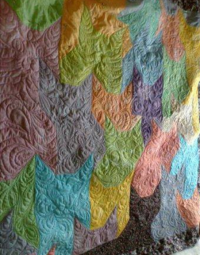
As easy quilt patterns goes, the Lots of Cats pattern must be one of the easiest! The pattern uses a lot of different fabrics and is a stash buster of note. It can be made in bolds or soft pastels.
A long time ago I made this special quilt for my sister who is crazy about cats. So many quilters are crazy about cats.
The pattern is still for sale in the shop
Quilt donated to the Rex and Sphynx breed group of South Africa
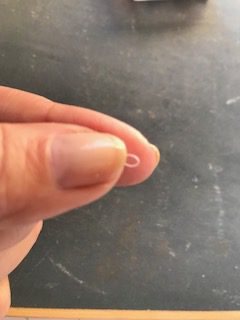
With hand stitching and boro making a comeback in the slow stitching movement, it is good to relook the tricks of the trade as they were used a couple of hundred years ago. One of these techniques is the Widow’s knot. The prime purpose of the widows knot is to keep the thread in the needle, once you start to work and therefore not worry about to keep the thread in the needle’s eye while you work.
To sew by hand can be one of the delights in our day. A simple frustration like to pull the thread from the needle while you sew, as a result can frustrate you and steal your peace.
The widow’s knot is used to when working with silk, as the thread can easily slip from the eye of the needle due to the jumpyness of the thread. I have for instance, taught it to children that learns to thread the needle, and to a couple of friends whose eyes have deteriorated where they too, battle to thread the needle. It also works beautifully with cotton thread as well.
How to make the widows’ knot
Fold the thread over the needle to make a little loopPlace the eye of the needle over the loopPull the loop as big as the needleFold the needle through the loopPull the threads to form the knotPull tight to form a tight knot at the base of the needle eye.
You now have needle with thread that won’t slip out. You can, as a result, fully concentrate to make beautiful stitches.
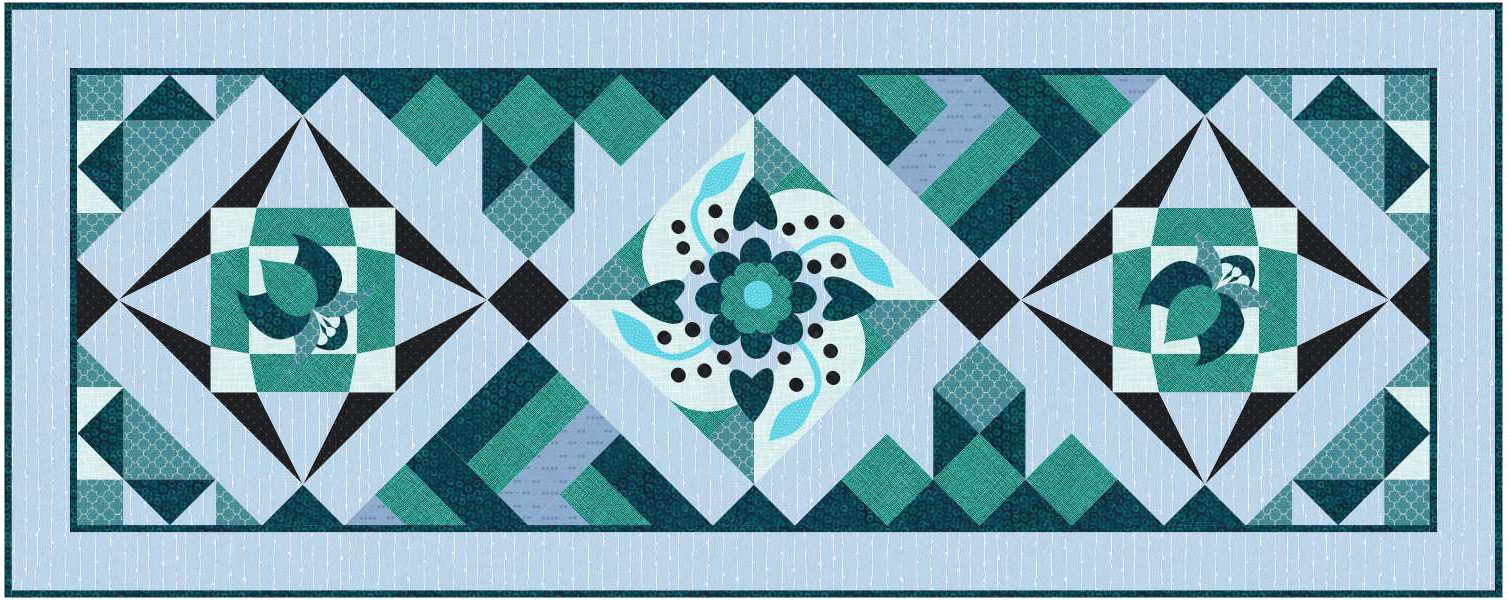
Blue grass Table Runner
Contact me to book a class. I teach classes from beginner to advanced techniques.
This post is part of Lenad Quilting and was written by Danél Muller, Pretoria, South Africa, 2020
15 years ago, I didn’t think it possible but in 2006, I started my quilting journey. And what a journey! I jumped right into it! I didn’t know where to learn basic quilting skills.
In retrospect, I know that my quilting journey might have been a lot easier if I did a course in basic patchwork and quilt making to use as foundation for my artwork at that stage. This brings me a full circle since qualifying as an accredited quilt teacher of the South African Quilters Guild.
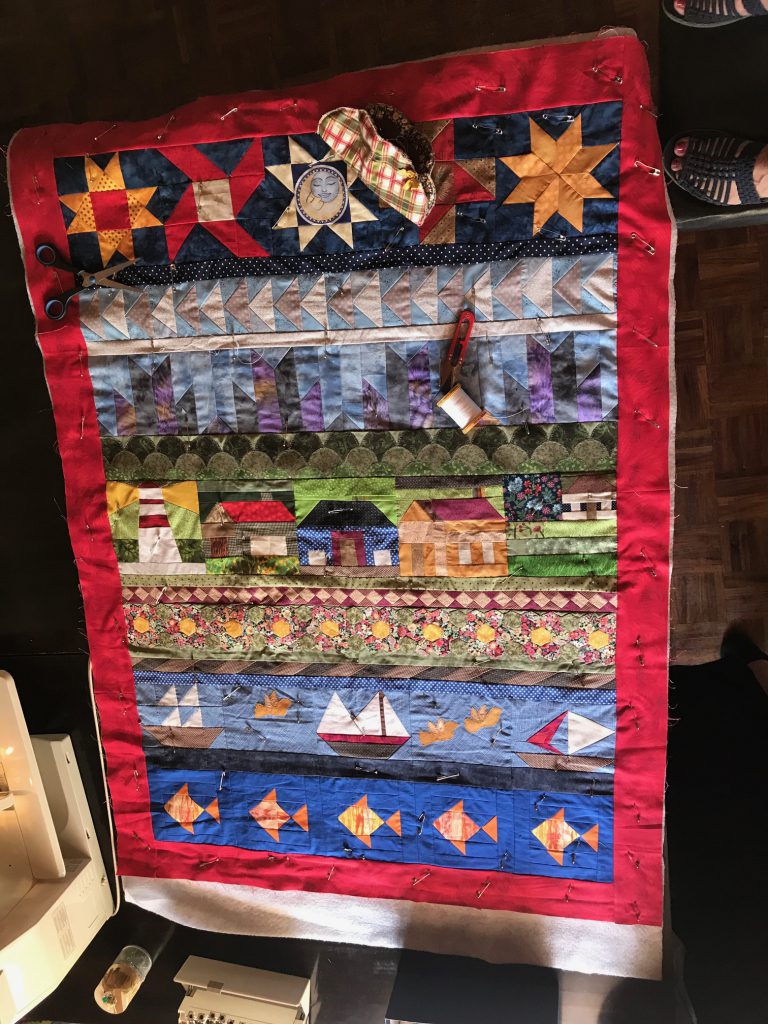
This quilt finishes in a quaint pictorial sampler called : “Through the Eyes of Cy”. When I developed the pattern, I used my 4 year old grandson, Cylus, to imagine how he looks at the world around him. Since he loves to draw in bright colors, these are the colors I design with.
True to my background, I designed my sampler in pictorial style, row by row with each row specializing in another technique.
Is this quilting course also for advanced quilters, you may ask. I bet that you will be challenged at some or other stage during the construction. You might also find some of the techniques you avoided previously, surprisingly stimulating. I mostly find people attracted to the mesmerizing addiction of hand piecing and needle turn applique.
“Through the eyes of Cy” is a happy, content rich quilt that will look lovely hanging in your home or cuddled by a little boy. There are also patterns available in larger sizes to cover a single bed (for a lucky boy). You also learn the basic quilting skills as you go!
Techniques included in this course include:
– Machine piecing – Hand Piecing – Machine Applique – Hand Applique – Paper Foundation Piecing – English Paper Piecing – Seminole braids – Y insert seams – Easy applications for Flying Geese – Star Blocks – Borders Bindings and Sleeves – Finishing off with a pretty label and many more…
Through the eyes of Cy – Made by Judy Barnard
Contact me for the starting date of the next course. I teach in the East of Pretoria.
Quilting is not a hobby. It’s a way of life. Over the past twenty years, I have learnt many lessons and used many tools and gadgets. On this website, I want to share the patterns, rulers and templates that have made my life a little easier.
I support Up-Cycled Cloth CollectiveStop and think: How can I re-purpose this piece of cloth before I put in in the landfill?